
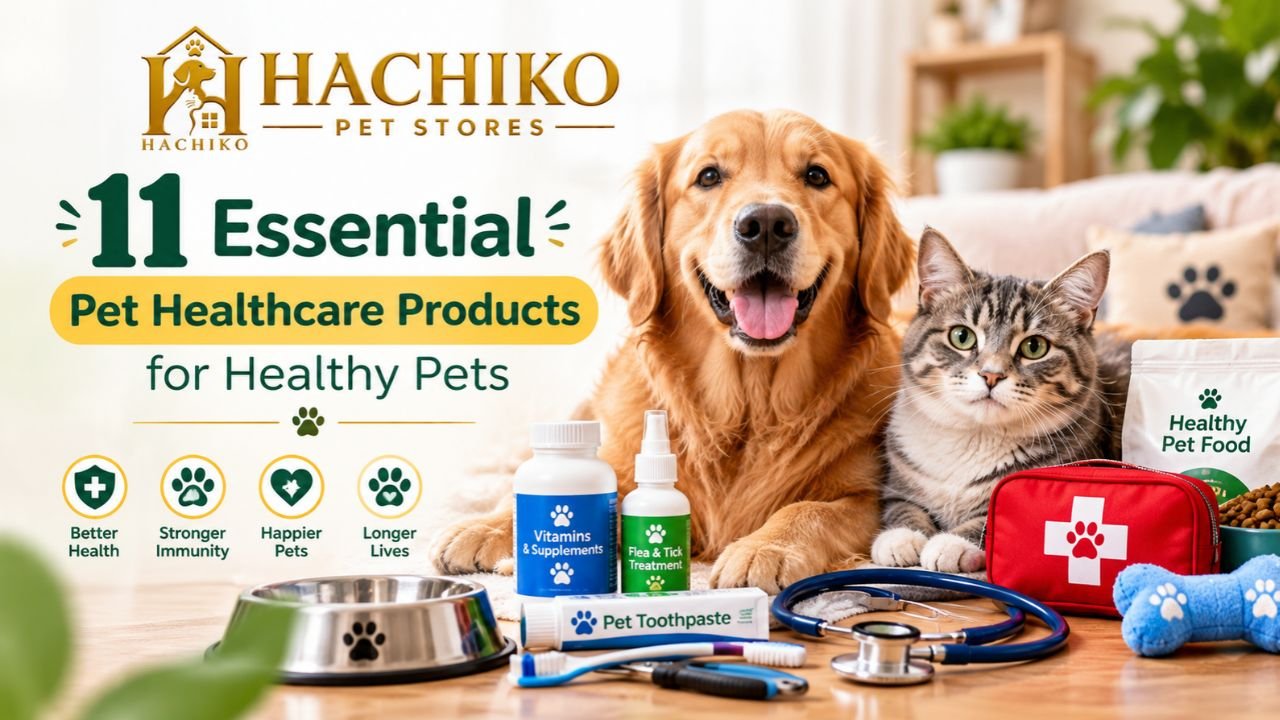
Taking care of a pet involves much more than providing food, water, and a comfortable place to sleep. Regular hygiene, dental care, grooming, parasite prevention, nutrition, and preventive health routines all contribute to a pet’s overall wellbeing. Having the right pet healthcare products at home can make everyday care more convenient and help pet parents maintain healthy routines.
From dental-care essentials and grooming supplies to hygiene products and wellness accessories, the right pet healthcare products can support different aspects of daily pet care. However, products should always be selected according to the pet’s species, age, size, lifestyle, and individual needs.
At Hachiko Pet Stores, pet parents can explore a range of products designed to support everyday pet care and wellness. This guide explains 11 useful categories of pet healthcare products, how they can be used, and what to consider before choosing them.
Table of Contents

Why Pet Healthcare Products Are Important
Pets cannot explain when something feels uncomfortable or when their health is changing. Regular observation and preventive care therefore play an important role in responsible pet ownership.
Quality pet healthcare products can help pet parents maintain basic hygiene and wellness routines between professional veterinary visits. For example, dental-care products can support oral hygiene, grooming supplies can help maintain the coat and skin, and appropriate parasite-control products can help reduce certain parasite risks.
The American Veterinary Medical Association emphasizes preventive care, nutrition, weight management, behavior, and regular veterinary involvement as important parts of animal health and welfare.
It is important to remember that healthcare products are not a substitute for veterinary diagnosis or treatment. If a pet shows persistent symptoms, pain, unusual behavior, difficulty eating, significant skin problems, or other concerning changes, professional veterinary advice should be sought.
11 Essential Pet Healthcare Products
1. Pet Dental Care Products
Dental hygiene is an important part of everyday pet care. Dogs and cats can develop plaque, tartar, gum inflammation, and periodontal disease, making regular oral care useful.
Common pet healthcare products for dental routines include:
- Pet toothbrushes
- Finger brushes
- Pet-formulated toothpaste
- Dental chews
- Dental diets
- Oral-care additives
Pet parents should choose products specifically formulated for animals. Human toothpaste should not be assumed to be safe for pets.
The AVMA notes that regular tooth brushing is an effective part of maintaining oral health between professional dental cleanings, while also pointing out that not every dental product marketed for pets is necessarily effective.
How to Build a Dental Routine
Start slowly and allow your pet to become comfortable with the toothbrush and pet-safe toothpaste. Positive reinforcement can make the process easier.
Watch for signs such as persistent bad breath, swollen gums, excessive tartar, bleeding, difficulty chewing, or changes in eating behavior. These signs may require veterinary evaluation rather than simply adding another product to the routine.
2. Pet Grooming Products
Grooming is another important part of maintaining pet hygiene. Depending on the breed and coat type, pets may require regular brushing, bathing, nail care, and coat maintenance.
Useful pet healthcare products in this category include:
- Grooming brushes
- Combs
- Pet shampoos
- Conditioners
- Nail clippers
- Grooming wipes
- Ear-cleaning products
Different pets have different grooming requirements. A long-haired dog may need more frequent brushing than a short-haired dog, while some cats may require specialized grooming support.
Choosing Grooming Supplies
Always consider your pet’s coat, skin condition, size, and grooming needs before selecting a product. Use shampoos and cleaners made specifically for pets rather than assuming human products are suitable.
If your pet develops persistent itching, redness, hair loss, wounds, or unusual skin changes, speak with a veterinarian.
3. Flea and Tick Prevention Products
Fleas and ticks can cause discomfort and may also transmit diseases or contribute to other health problems. Preventive care is therefore an important component of responsible pet ownership.
Depending on veterinary recommendations, pet healthcare products for parasite prevention may include:
- Flea-control products
- Tick-control products
- Preventive collars
- Topical treatments
- Oral preventive products
The appropriate option can depend on the animal’s species, weight, age, lifestyle, location, and health status.
Why Parasite Prevention Matters
Parasite prevention should not be based only on whether you can currently see fleas or ticks. Veterinary guidance can help determine an appropriate prevention plan.
The AVMA recommends discussing parasite-control programs with a veterinarian because the most suitable product and schedule can vary according to an individual pet’s needs.
4. Deworming and Intestinal Parasite Care
Intestinal parasites are another consideration for dogs and cats. Some parasites can cause digestive problems and, in certain circumstances, may also pose risks to people.
Appropriate pet healthcare products may include veterinarian-recommended deworming or parasite-prevention products.
Follow the Correct Schedule
Do not select or administer a deworming product simply because another pet uses it. Products and dosages can vary according to species, age, weight, health status, and the parasite involved.
The AVMA explains that veterinarians can recommend a regular parasite-control program and may use stool testing and other information to determine appropriate treatment or prevention.
Good hygiene also matters. Promptly clean up pet waste, wash hands after handling animals or contaminated soil, and keep living areas clean.
5. Ear Care Products
Some dogs and cats can develop earwax buildup or other ear problems. Appropriate ear-cleaning products may be useful as part of a routine recommended for the individual pet.
Common pet healthcare products for ear care include:
- Pet ear-cleaning solutions
- Soft cleaning pads
- Veterinary-recommended ear products
Use Ear Products Carefully
Never insert cotton swabs or other objects deeply into a pet’s ear canal. If there is a strong odor, discharge, swelling, repeated scratching, head shaking, or obvious pain, professional veterinary evaluation is more appropriate than attempting to treat the problem at home.
Ear problems can have different causes, so using an unsuitable product may make the situation worse.
6. Skin and Coat Care Products
Healthy skin and a well-maintained coat can contribute to overall comfort. Regular brushing also gives pet parents an opportunity to notice changes such as lumps, parasites, dryness, wounds, or unusual hair loss.
Useful pet healthcare products can include:
- Pet-specific shampoos
- Moisturizing grooming products
- Coat conditioners
- Brushes
- Detangling tools
- Cleaning wipes
Maintain a Regular Skin-Care Routine
Choose products based on your pet’s coat and skin requirements. Avoid constantly changing products if your pet’s skin is sensitive.
If your pet develops persistent itching, redness, sores, excessive shedding, or hair loss, contact a veterinarian to identify the underlying cause.
7. Paw and Nail Care Products
Paws receive a lot of exposure during walks and outdoor activities. Nail care and basic paw hygiene can therefore be part of a pet’s regular routine.
Useful pet healthcare products may include:
- Nail clippers
- Nail grinders
- Paw-cleaning wipes
- Pet-safe paw balms
- Grooming tools
Keep Paws Comfortable
Check the paws regularly for cuts, foreign objects, irritation, or cracked areas. Nails should be trimmed carefully because cutting too far can cause pain and bleeding.
If you are uncomfortable trimming your pet’s nails, consider asking a professional groomer or veterinarian for assistance.
8. Pet First-Aid Supplies
A basic pet first-aid kit can be useful for minor situations while you arrange appropriate professional care when necessary.
Some general supplies can include:
- Gauze
- Bandages designed for pets
- Disposable gloves
- Clean towels
- Tweezers
- Pet-safe cleaning supplies
- A digital thermometer designed for appropriate use
These pet healthcare products should be viewed as emergency-support supplies rather than replacements for veterinary treatment.
Know When Professional Help Is Needed
Heavy bleeding, breathing difficulty, poisoning, severe injury, collapse, seizures, major wounds, or other emergencies require veterinary attention.
A first-aid kit can help you respond while obtaining professional help, but it should not be used to delay necessary veterinary treatment.
9. Supplements and Nutritional Support
Some pets may require nutritional support based on their individual circumstances. Supplements can include products marketed for areas such as joints, skin and coat, digestion, or general nutritional support.
However, supplements are not automatically necessary for every healthy pet.
Before choosing these pet healthcare products, consider:
- Your pet’s age
- Current diet
- Existing health conditions
- Weight
- Activity level
- Medications
- Veterinary recommendations
Choose Supplements Carefully
More is not always better. Some ingredients can interact with medications or may be inappropriate for certain animals.
A balanced diet and appropriate feeding routine should remain the foundation of pet nutrition. Discuss supplements with your veterinarian when your pet has specific nutritional or health requirements.
10. Hygiene and Cleaning Products
A clean environment can support good everyday pet hygiene. Pet parents can use suitable cleaning products for food bowls, bedding, toys, litter areas, cages, crates, and other frequently used spaces.
Examples of pet healthcare products in the broader hygiene category include:
- Pet-safe cleaning solutions
- Disinfecting products appropriate for animal environments
- Odor-control products
- Grooming wipes
- Litter-area cleaning supplies
- Bedding-cleaning products
Keep the Pet Environment Clean
Wash food and water bowls regularly and clean sleeping areas according to the material and manufacturer’s instructions.
For multi-pet households, regular cleaning can also help maintain a healthier living environment. Always check whether a cleaning product is safe for use around animals and follow its directions.
11. Health Monitoring and Wellness Accessories
Monitoring your pet’s everyday condition can help you notice changes early. Depending on the pet and household routine, useful wellness accessories can include:
- Pet weighing scales
- Grooming tools
- Feeding measuring tools
- Health record organizers
- Digital thermometers designed for pets
- Medication organizers
These pet healthcare products can support observation and organization but should not replace veterinary examinations.
Observe Changes in Everyday Behavior
Pay attention to appetite, water consumption, activity, weight, bathroom habits, grooming behavior, and overall mood.
A sudden or persistent change may be worth discussing with your veterinarian, particularly if several signs appear together.

How to Choose the Right Pet Healthcare Products
With so many options available, choosing products can sometimes feel confusing. A simple selection process can help.
Consider Your Pet’s Species
Dogs, cats, birds, fish, and other companion animals have different healthcare and hygiene requirements. A product suitable for one species may not be appropriate for another.
Always check the product label for the intended species.
Check Age and Weight Requirements
Many healthcare products have age, weight, or size requirements. This is particularly important for parasite-control products and supplements.
Never assume that a product designed for one weight category is suitable for another.
Read the Ingredients
Before purchasing pet healthcare products, read the ingredient list and usage instructions.
Look for clear information about:
- Intended species
- Recommended quantity
- Age restrictions
- Weight requirements
- Usage instructions
- Storage instructions
- Expiry information
Consider Your Pet’s Existing Health Needs
A pet with allergies, kidney problems, digestive issues, skin disease, or other health concerns may require a different product strategy.
When in doubt, ask your veterinarian before introducing a new healthcare product.
How Hachiko Pet Stores Can Help
Finding appropriate products becomes easier when pet parents have access to a wide range of everyday pet supplies in one place.
Hachiko Pet Stores focuses on making pet shopping convenient by providing products for different areas of everyday pet care. From food and treats to grooming supplies, accessories, hygiene essentials, and pet healthcare products, a well-organized pet store can help owners manage their regular shopping needs.
When selecting a product, the goal should not simply be to purchase the most expensive option. Instead, consider whether the product is appropriate for your pet’s needs, whether the instructions are clear, and whether professional advice is needed.
For specific medical conditions, diagnosis, prescription medication, or treatment decisions, a veterinarian should remain the appropriate source of professional medical guidance.
7 Tips for Using Pet Healthcare Products Safely
1. Read the Label
Always read the instructions before using a product. Follow the recommended amount, frequency, storage requirements, and safety warnings.
2. Use Species-Specific Products
Never assume a dog product is automatically suitable for a cat or another animal. Check the intended species carefully.
3. Check the Expiry Date
Expired products may not provide the intended benefits and should generally not be used.
4. Store Products Properly
Keep pet healthcare products away from children and pets unless the product is specifically intended for supervised use.
5. Do Not Mix Products Without Advice
Some products may contain similar active ingredients or may interact with medications. Ask your veterinarian before combining healthcare products when there is uncertainty.
6. Monitor Your Pet
After introducing a new product, observe your pet for unusual reactions. If concerning symptoms occur, stop and seek appropriate professional advice.
7. Keep Veterinary Care Part of the Routine
Products support everyday care, but regular veterinary examinations and professional guidance remain important components of responsible pet ownership. The AVMA describes veterinary teams as playing an important role in preventive care, nutrition, weight management, behavior, and overall animal health.
Frequently Asked Questions About Pet Healthcare Products
What are pet healthcare products?
Pet healthcare products are products used to support everyday pet hygiene, wellness, grooming, dental care, parasite prevention, skin care, and other routine needs. The appropriate products depend on the pet’s species, age, size, lifestyle, and individual health requirements.
Which pet healthcare products should every pet owner have?
There is no single universal list for every animal. Basic grooming supplies, dental-care products, appropriate hygiene items, and veterinarian-recommended parasite prevention may be useful starting points. Your pet’s individual needs should determine what you actually purchase.
Are pet dental products important?
Yes, dental care can be an important part of a pet’s routine. Tooth brushing and appropriate dental products can support oral hygiene. However, persistent bad breath, swollen gums, bleeding, pain, or difficulty eating should be evaluated by a veterinarian.
Can I use human shampoo on my pet?
It is generally better to use grooming products specifically formulated for the animal. Pets can have different skin requirements from humans, so choose products according to your pet’s species and needs.
Are flea and tick products necessary?
Parasite prevention can be an important part of pet care, but the appropriate product and schedule depend on the individual pet. A veterinarian can help determine a suitable parasite-control program.
Should I give my pet supplements?
Not every pet needs supplements. If your pet has a specific nutritional or health requirement, discuss the appropriate product with a veterinarian before adding it to the daily routine.
How often should I groom my pet?
The ideal grooming frequency varies according to species, breed, coat type, age, and lifestyle. Some pets require frequent brushing, while others need less maintenance.
Where can I find quality pet healthcare products?
Pet parents can explore Hachiko Pet Stores for a variety of pet supplies, grooming essentials, hygiene products, and other everyday care items. For medical conditions or treatment decisions, consult a veterinarian.

Conclusion
Choosing the right pet healthcare products can make everyday pet care more organized and convenient. Dental supplies, grooming products, parasite-prevention products, ear-care items, paw-care tools, first-aid supplies, nutritional support, hygiene products, and wellness accessories can all have a place in a responsible pet-care routine.
However, the right product depends on the individual animal. Always consider species, age, weight, lifestyle, existing health conditions, ingredients, instructions, and professional recommendations before introducing a new product.
Hachiko Pet Stores provides pet parents with convenient access to a variety of products for everyday pet needs. Whether you are maintaining dental hygiene, grooming your pet, managing routine hygiene, or looking for suitable wellness supplies, choosing products carefully can help support a comfortable and healthy lifestyle.
Remember that pet healthcare products are designed to support everyday care—not replace professional veterinary diagnosis, treatment, or preventive examinations. When you notice persistent or concerning changes in your pet’s health, contacting a qualified veterinarian is the safest next step.
Hachiko Pet Stores — Love, Care, Comfort — Happiness for Every Paw.